FEATURED IN: Bionetix Launches BIO-ECO-WASH Probiotic Cleaner Featured in Maritime Today Magazine
FEATURED IN: Bionetix® Introduces BIO-ECO-WASH™: A Powerful, Eco-Friendly Cleaning Concentrate Featured in CT Magazine
FEATURED IN: Bionetix Launches BIO-ECO-WASH Probiotic Cleaner Featured in Maritime Logistics Magazine
NEWS ALERT: Meet Our Newest Expert in Bionetix® Bugs and Biotechnology!
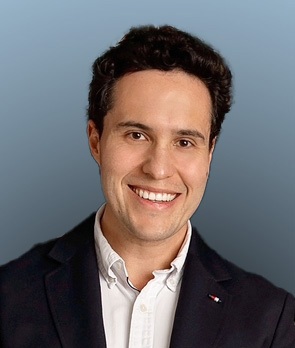
When you need answers, it is great to know an expert in the industry. That is why David Sanchez Llano is such an outstanding addition to our Inside Sales and Product Support team at Bionetix® International. When David joined Bionetix® in October, he already knew what he was talking about. David earned his master’s degree in biology (specializing in industrial and environmental microbiology) and spent the last decade studying “bugs.” He even patented his own biocontrol product!
At Bionetix®, David plans to put his in-depth knowledge of microbiology to good use by providing expert support for Bionetix® clients who need to tackle cleanup and agricultural challenges in an environmentally friendly manner. David aims to provide speedy and precise knowledge of our portfolio of microbial products with a special focus on the benefits of key active ingredients. His appreciation for the technology behind each product is evident in his choice of a favorite product, AQUA-FEED™, which he describes as “an authentic piece of art” because of its unique composition that sets it apart from other probiotic feeds on the market.
David is driven to unlock new opportunities and expand our reach by building relationships of trust with overseas distributors and adding product registration in multiple countries for the benefit of even more users. He is also fluent in Spanish, significantly enhancing our ability to connect with clients in Latin America. Contact him today for expert insight and support where you need it most!
David Sanchez Llano, M.Sc., Mcb. A.
M. 514-972-0809
E. [email protected]
Keywords: Bionetix, biotechnology, biotechnology expert, probiotics, applied microbiology, environmental cleanup, probiotic cleaners, green cleaners, probiotic feed, benefits of probiotics
For a PDF version please click here.
PRODUCT RELEASE: Bionetix® Launches BIO-ECO-WASH™ Probiotic Cleaner for Sensitive Environments
 Bionetix® is pleased to announce the release of a new cleaning concentrate for use in sensitive environments! BIO-ECO-WASH™ is a low foaming formula that combines natural surfactants with probiotics for effective cleaning, degreasing, and surface prep in a variety of industrial and marine applications. With BIO-ECO-WASH™, industrial users can boost cleaning power while reducing their environmental impact.
Using the Power of Nature to Clean Sensitive Environments
Surfactants are a critical component of cleaners, loosening particles of dirt and grime so they are easier to rinse away. By using naturally derived surfactants in BIO-ECO-WASH™, Bionetix® minimizes the danger of polluting the environment with synthetic surfactants. But the benefits of nature do not stop there. BIO-ECO-WASH™ also contains probiotics—beneficial microorganisms that enhance cleaning performance by digesting contaminants such as grease and other organic deposits. These probiotics continue working even after the initial application, providing residual cleaning on the treated surface and in the downstream rinsewater.
A Probiotic Cleaner for Many Surfaces
Because of its ability to digest grease and organic materials, BIO-ECO-WASH™ is suitable for use in tough industrial environments, where it can be used to clean machinery, tools, engines, and production equipment. Even so, it can also be used safely on a variety of surfaces, including linoleum, PVC, laminate, wood, fiberglass, and stone. These characteristics make BIO-ECO-WASH™ suitable for use in many marine and transportation cleaning applications:
- Boat interiors and exteriors
- Buses, trucks, and cars
- Docks, pontoons, and other floating surfaces
- Mooring bollards
“Green” Chemistry for Light or Heavy-Duty Cleaning
BIO-ECO-WASH™ is a liquid concentrate that can be diluted in water as much as 1:40 for general cleaning applications or as little as 1:10 for heavy-duty cleaning power. This makes BIO-ECO-WASH™ ideal for large commercial or industrial cleaning accounts or for formulators repackaging green cleaners for consumer use. Whether that means washing a bus, cleaning a boat, or prepping a dock for painting, BIO-ECO-WASH™ is here to help minimize environmental impact while boosting cleaning power. Contact Bionetix® to learn more about how probiotic cleaning technology can benefit you.
Keywords: Bionetix, probiotic cleaner, cleaner for sensitive environments, green cleaners, low foam cleaner, reduce environmental impact, green cleaners, boat cleaners, cleaners for marine environments, cleaners with natural surfactants
Need a High-Resolution Photo? Please Visit: www.cortecadvertising.com
For a PDF version please click here.
