
FEATURED IN: Cortec Promotes COO Pheneger to President Featured in Spray Technologies Magazine
FEATURED IN: It’s Time to Ride the Wave of the Growing Aquaculture Market Featured in Fish Focus Magazine
FEATURED IN: Boosting Biogas Efficiency for Winter Heating Featured in Water & Wastewater Magazine
FEATURED IN: Cortec® Names Caleb Pheneger as President Featured in Packaging Labelling Magazine
FEATURED IN: Bionetix Presents a Natural Approach to Boosting Aquaculture Health and Productivity Featured in Feed Planet
PRESS RELEASE: Cortec® Names Caleb Pheneger as President, Opening New Chapter of Excellence

Cortec® CEO, Chairman, and Founder Boris Miksic recently announced his selection of Caleb Pheneger, COO, as the new President of Cortec® Corporation. This represents a strategic expansion of Pheneger’s responsibilities as Chief Operating Officer over Cortec’s US and Canadian operations to now include full oversight of Cortec® Corporation under the direction of Miksic. Given Pheneger’s stellar performance and multiple promotions over the last 13 years, this appointment promises to open a new chapter of excellence for Cortec®, Bionetix®, and their customers.
Miksic started Cortec® in 1977 after immigrating to the US and continues leading with a forward-thinking spirit. Looking ahead to the company’s future, he noted that this promotion “signifies the generational change in our organization. After having been at the helm for 48 years, since [Cortec’s] inception in 1977, I felt that the time has come to give a chance to younger managers to take over and bring our Group to the next level.”
The move also encapsulates Miksic’s vision for internal promotion, growth, and innovation. Pheneger joined Cortec® straight out of Michigan Technological University in 2012. He was hired as a contract-to-hire chemical engineer by the R&D arm of the company. During his first two years he provided technical service support, completed projects, and performed testing for Cortec Laboratories®, Inc. He quickly rose to the position of Production Manager in 2014 and Director of Manufacturing in 2017. In 2022, Miksic created the role of Chief Operating Officer with Pheneger in mind, putting him in charge of operations at Cortec® and Bionetix®.
Referring to Pheneger’s new role as president, Miksic stated, “I’m excited with Caleb’s latest promotion . . . continuing on the path of ‘excellence and quality’ that is . . . engraved in Cortec’s logo, in all aspects of Cortec’s business model, new technologies, world class plants and laboratories, excellence in sales and marketing.”
Miksic will continue his role as CEO and Chairman, giving him the opportunity to coach Pheneger and his team while expanding market share for holdings in his homeland of Croatia. “As always I will be making investments in our people, processes, new plants, R&D and add . . . acquisitions as necessary to provide for future expansion with a goal towards having successful employees and happy customers globally,” he announced.
Please join Cortec® in congratulating Pheneger on his new role as we start an exciting new chapter of Cortec® history marked by increasing excellence and quality in corrosion control and biotechnology!
To learn more about Cortec® Corporation and its corrosion solutions, please visit: https://www.cortecvci.com/.
Keywords: Cortec, Cortec president, Caleb Pheneger, corrosion industry news, corrosion control, personnel changes, business news, Bionetix, Boris Miksic, Cortec history
Need a High-Resolution Photo? Please Visit: www.cortecadvertising.com
For a PDF version please click here.
PRESS RELEASE: Turn Up the Heat Next Winter with Better Biogas Production!
Wastewater treatment plants (WWTPs), farms, and food processing facilities have the incredible opportunity of transforming waste materials into heat and energy through onsite biogas production. Many already take advantage of anaerobic digestion to convert manure, wastewater, and plant-based waste into methane used to heat and power their own facilities. Yet this local form of renewable energy comes with inherent efficiency challenges—challenges that can be effectively addressed through bioaugmentation and biostimulation. Bionetix® International encourages biogas facilities to explore those options now so they can be ready for maximum heating efficiency when winter prompts them to turn up the thermostat.
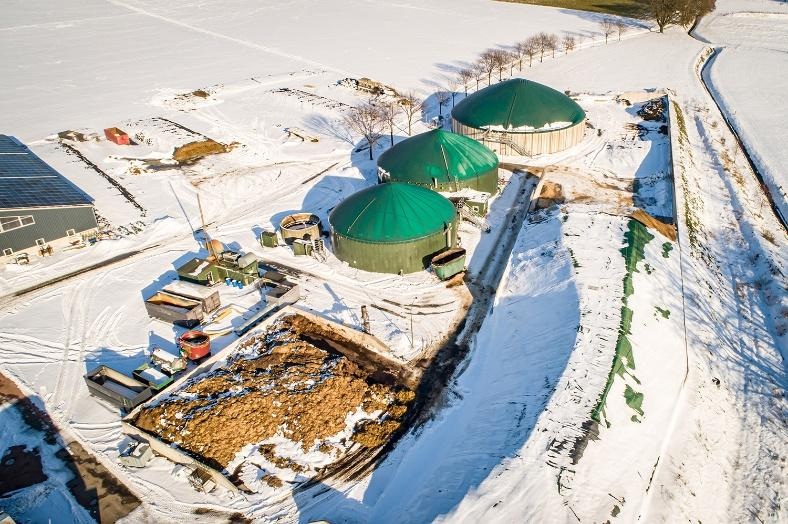
Enhance Performance with Microbes and Nutrients
Sometimes all that biogas generators need to fix these problems is to call in microbial and nutritional reinforcements. Bioaugmentation is the addition of beneficial microbes, and biostimulation is the addition of select nutrients that promote healthy microbial activity. One anaerobic digestion supplement that fulfills both purposes is BCP12™. BCP12™ contains select microorganisms and nutrients that promote healthy hydrolysis, acidogenesis, and acetogenesis to boost conversion of carbohydrates, fats, and proteins into methane formers. Moreover, BCP12™ appears to work well even in the presence of inhibitors that are common in lignocellulosic biomass,* making it an excellent addition to anaerobic digesters at facilities that process waste from food, crops, or pulp and paper.
BCP12™ showed promising benefits when applied during a trial at a wastewater facility that used excess methane to fuel the boilers that heated their own buildings and digestion process. The facility noticed an increase in biogas production that could significantly offset their need for natural gas at a fraction of the normal cost, so it was recommended that BCP12™ be added daily to the digester during the heating season.
Another great addition to anaerobic digesters is BIOGAS BOOSTER 3™, a special blend of three micronutrients specially chosen to stimulate microbial activity. These micronutrients are stable and bioavailable, ensuring easy microbial uptake. Laboratory testing conducted by York University, Ontario, in 2020 showed an increase in biogas production in just one week when BIOGAS BOOSTER 3™ was used.* An increase like this in the field would mean that facilities could get more thermal energy and electricity, thereby increasing the energy recovery from digested substrates.
Turn Up the Heat Next Winter
If your facility needs to discard large amounts of wastewater, manure, or food scraps, don’t miss your opportunity to convert waste into valuable biogas and help cut your facility heating and energy bill next winter. Then, go one step farther to optimize efficiency with bioaugmentation and biostimulation so you don’t have to feel guilty next time you turn up the thermostat! Need additional help? Contact Bionetix® International for further assistance maximizing your biogas efficiency.
*York University NSERC Engage Project Report, “Novel Bacterial Blend to Enhance Biomethanation of Municipal Sewage Sludge,” 11 December 2020. Prepared by Prof. Brar’s Team: Dr. Bikash Tiwari, Rahul Saini, and Mona Chaali.
Keywords: biogas, how to cut winter heating costs, anaerobic digestion challenges, biogas challenges, bioaugmentation, manure handling tips, Bionetix, wastewater treatment plant heating options, renewable energy, what to do with pulp and paper waste
Need a High-Resolution Photo? Please Visit: www.cortecadvertising.com
For a PDF version please click here.
NEWSLETTER: The Leading Edge Newsletter, July 2025
NEWS ALERT: Probiotics: It’s Time to Ride the Wave of the Growing Aquaculture Market!
July 15, 2025
Today we see exciting expansion in the aquaculture industry with a strong interest in sustainability. The current market, valued at more than $300 billion, is expected to grow at a steady rate to a value of more than $400 billion by 2030. The most prominent growth is in the Asia Pacific, where aquaculture consumption is high, export demand is growing, and government support is increasing. Bionetix® sees these trends as an exciting opportunity for aqua farming suppliers to ride the wave of aquaculture demand with probiotic solutions that promote productivity and sustainability.
The Aquaculture Market Landscape
Probiotics are the perfect complement to current aquaculture needs because they simultaneously support better productivity and sustainability.
AQUA-FEED™ is a natural feed additive rich in β-glucans, mannan-oligosaccharides (MOS), beneficial probiotics, and other key vitamins, nutrients, and minerals. It can be added to fish and shrimp food to support overall species’ health.
BCP54™ can be directly applied to aquaculture pond systems to enhance water clarity, reduce suspended solids, and promote microbial balance. The microbial consortia in BCP54™ accelerate the biodegradation of organic waste—including fecal solids, uneaten feed, and detritus—by enzymatic hydrolysis and nutrient cycling. They also mitigate nutrient loading by converting nitrogenous and phosphatic compounds into biomass, while simultaneously lowering ammonia and hydrogen sulfide (H₂S) concentrations through microbial assimilation and nitrification-denitrification pathways.
Get Probiotics Going in Your Part of the World!
Adding probiotics to fish feed and pond water is a quick and easy investment with big returns. By adding probiotics to the aquaculture management routine, fish and shrimp farmers have a simple way to help meet market demands while acting sustainability and responsibly. Contact Bionetix® to learn more about the possibility of incorporating probiotics into the aquaculture market in your part of the world!
For a PDF version please click here.
